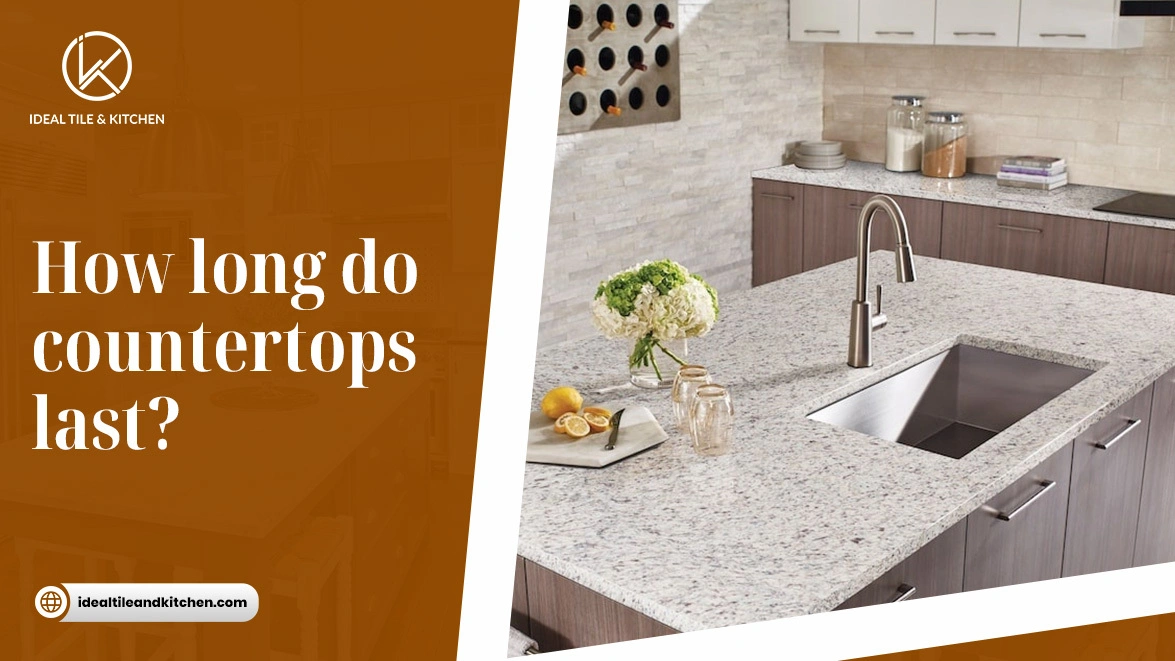
Countertop lifespan depends on material type, maintenance quality and daily usage conditions. Longevity varies widely across homes and commercial spaces. High-quality options like granite and quartz can last for decades when properly cared for.
Core Takeaways
- Granite countertops can last 30–100 years. But with proper sealing & care.
- Quartz surfaces typically last 20–40 years. This is due to their engineered composition.
- Maintenance quality & sealing frequency strongly influence lifespan outcomes.
- Heavy usage, heat exposure and poor installation reduce durability.
- Proper cleaning routines can extend countertop life by decades.
Average Lifespan of Countertops
Countertop longevity varies based on material composition and usage intensity. Stone countertops’ lifespan generally outperforms laminate or wood options in both durability and resistance to wear. Premium materials often remain structurally sound for decades when properly maintained, making them an investment for kitchens and bathrooms.
Granite remains one of the most durable natural surfaces available. Granite countertop longevity can exceed half a century in residential environments. Quartz offers engineered strength with a slightly lower lifespan. But it has greater consistency. Both materials outperform budget alternatives in scratch resistance and moisture protection over time.
- Granite: 30–100 years. It depends on sealing and care
- Quartz: 20–40 years with stable performance
- Marble: 20–50 years. But more prone to etching
- Laminate: 10–20 years under normal usage
- Solid surface: 20–30 years with moderate maintenance
Factors Affecting Countertop Lifespan
Durability is not determined by material alone. Several environmental and usage variables directly influence how long a countertop maintains its structure and appearance.
Understanding these elements helps homeowners maximize return on investment. Moreover, they’re also able to reduce early surface degradation over time.
Material Composition
Countertop material durability is the strongest predictor of lifespan. Natural stones like granite offer high resistance to heat as well as scratches. Engineered quartz provides uniform strength. But it can be less heat-tolerant. Lower grade materials degrade faster under constant daily kitchen activity and moisture exposure.
Installation Quality
Improper installation reduces performance significantly. Countertop installation quality affects leveling as well as sealing effectiveness. Poor alignment creates stress points that lead to cracking or separation over time, especially in heavy use kitchen environments.
Sealing & Protection
Stone surfaces require periodic sealing to prevent moisture absorption. Surface sealing maintenance helps protect against stains and bacterial buildup. Without proper sealing cycles even premium granite can lose its resistance to liquids and oils. As a result, it reduces durability.
Daily Usage Patterns
Frequent chopping, hot cookware placement and heavy object impact influence wear levels. Kitchen usage intensity accelerates surface dulling & micro damage. Light usage households often experience significantly longer countertop lifespans compared to high traffic kitchens.
Cleaning Practices
Harsh chemicals damage protective layers over time. Countertop cleaning methods must remain gentle and pH balanced. Abrasive scrubbing or acidic cleaners can weaken surface integrity. Moreover, they can also reduce lifespan gradually with repeated exposure.
Environmental Conditions
Humidity, temperature fluctuations & sunlight exposure affect performance. Environmental stress factors can cause expansion, discoloration or surface weakening, especially in poorly ventilated kitchens or outdoor installations.
Material Quality Grade
Not all granite or quartz is equal. Stone quality grading determines density, porosity and resistance levels. Higher grade materials consistently outperform lower grade slabs in durability and stability.
Tips to Increase Countertop Lifespan
Extending countertop life requires care & preventive maintenance habits. Small routine actions significantly improve resistance against wear as well as environmental stress. All while preserving visual quality for years.
Regular Sealing Routine
Applying sealant at recommended intervals protects porous surfaces from stains and moisture penetration. Stone sealing protection ensures resistance and reduces internal damage risks.
Use Protective Tools
Cutting boards and heat pads prevent direct surface impact. Countertop protection accessories minimize scratches and thermal shock, preserving structural integrity over time.
Immediate Spill Cleaning
Spills should be cleaned quickly to prevent absorption. Surface stain prevention reduces discoloration risks, especially on natural stone materials.
Avoid Harsh Chemicals
Mild cleaners preserve surface coatings better than strong acidic solutions. Safe cleaning solutions maintain finish quality and reduce chemical erosion over time.
Schedule Professional Maintenance
Periodic inspections help detect early damage. Countertop maintenance services restore seal integrity & fix minor issues before they escalate into major repairs.
Conclusion
Countertop lifespan depends heavily on different factors. Such as material choice, maintenance discipline and daily usage intensity. Granite countertops’ durability can exceed several decades. Whereas quartz countertop lifespan remains stable with minimal maintenance.
Environmental conditions, installation quality and cleaning habits also play critical roles in determining long term performance. Proper sealing, protective practices and timely maintenance significantly extend usability and preserve aesthetic value.
While premium materials offer impressive longevity, they require consistent care to reach their full potential. Ultimately, countertops are an investment, and their lifespan reflects how well they are maintained over time. If you’re considering kitchen remodeling, choosing the right materials and maintaining them properly becomes even more important. With the right approach, homeowners can maximize durability, reduce replacement costs, and maintain premium surface quality for decades.
Feel free to contact Ideal Tile and Kitchen.
FAQ Section
Do quartz countertops last longer than marble?
Yes, it does generally lasts longer. This is due to its engineered composition. Marble is more prone to etching and staining. It reduces its effective lifespan compared to quartz surfaces.
What is the biggest factor in countertop durability?
Material quality combined with maintenance practices has the greatest impact. Poor sealing, harsh cleaning and heavy usage can reduce lifespan… regardless of original material strength.